
Jiten Bhatt Jiten Bhatt

Is the OCS Recertification Worth the Cash and the Stress? My Honest Review of the Process

is the Physical Therapist OCS recertification process worth it? I give an honest review after going through the process..
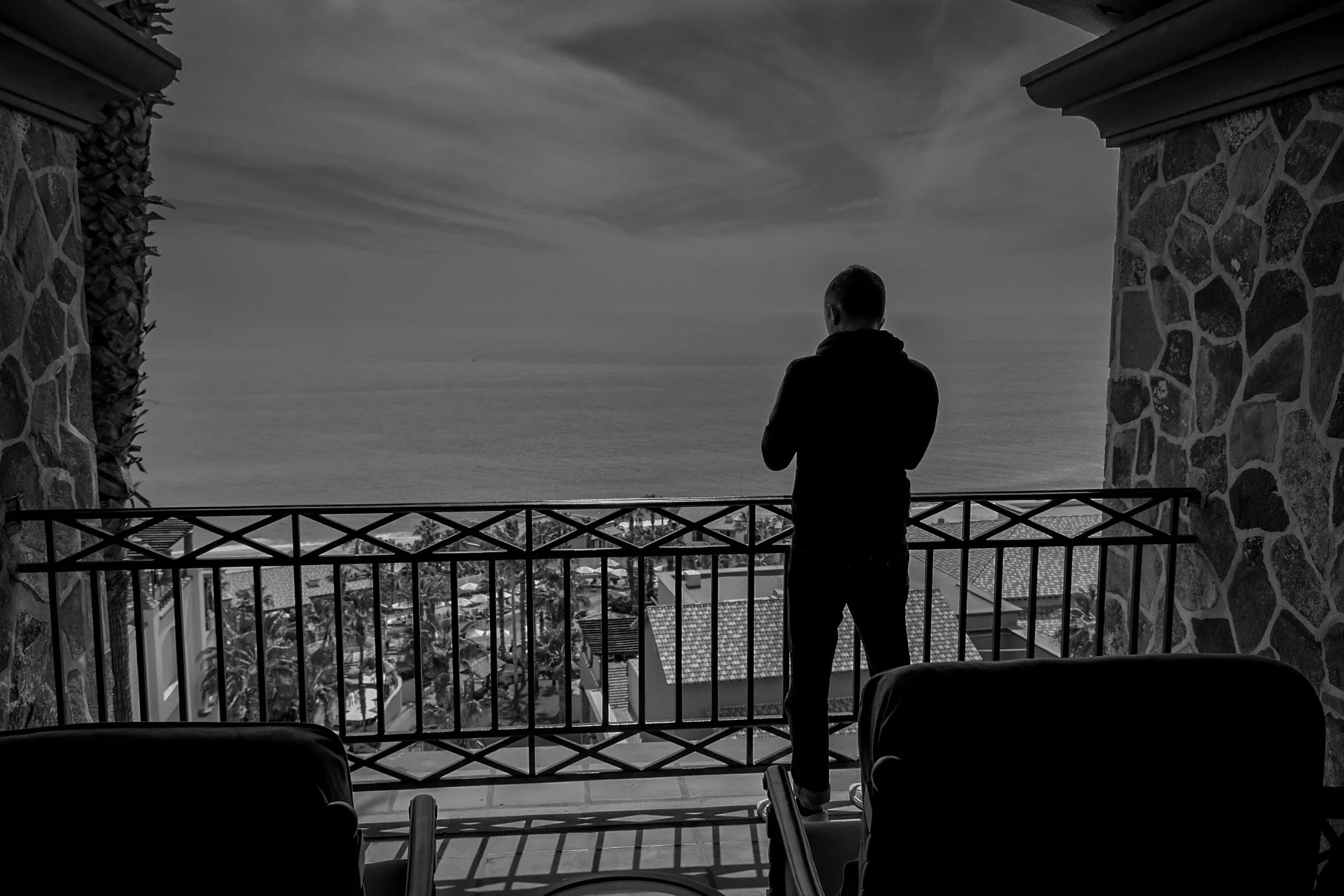
Pondering my decision of recertifying in Cabo after the Jetset Rehab Education course with Dr Daprato on Myofascial Decompression.

If you’re staring down your 10-year American Physical Therapy Association (APTA) Specialist Certification renewal, you already know the landscape has changed. The days of sitting for a massive, high-stakes proctored exam at a testing center are gone—replaced by a maintenance model that includes a continuous "Knowledge Review." (This is of course unless you prefer the pressure of the proctored exam which is an option to any person recertifiying)

I recently completed the OCS Knowledge Review, and honestly, it was a completely different beast than the initial exam. If you are currently on the fence about recertifying or feeling overwhelmed by the process, here is a transparent look at exactly how it went, what it costs, how to prep, and my ultimate takeaway on whether it's worth it.

1. Navigating the Logistics: Registration & The Portfolio

The recertification process starts long before you open the exam portal. You have to prove you’ve been doing the work over three distinct Maintenance of Specialist Certification (MOSC) cycles which occur at 3, 6, & 9 years from your last test. .

The Cost Breakdown (Member vs. Non-Member)

First, let’s talk numbers. The total financial commitment varies drastically depending on whether you maintain your APTA membership:

fee table of OCS fees

Fee schedule for OCS recertification APTA vs Non-APTA members

Building the Portfolio

To sign up, you have to compile a variety of information. You will need to gather and submit your current license, verified direct patient care hours, and a comprehensive record of your professional development. This includes:

Yes. CEUs count as pert of your recertification. Participant learning Neurodynamics with Michael Shacklock at a Jetset Course.

  • Continuing education courses (Con-Ed) / CEUs (Like the ones you take with Jetset Rehab Education 😊)

  • Clinical teaching (in a school or con ed setting), supervision or mentorship hours

  • Relevant administrative work and leadership work such as being a subject matter expert, item writing for an exam, starting a residency or fellowship, community service.

  • The Case Reflection: This was a lengthy, deep-dive section which engages into orthopedic clinical reasoning. Writing it honestly reminded me of my days filling out prep forms for fellowship mentors as it did a 360 view on a specific patient case. It takes a significant amount of time—arguably the longest part of the entire onboarding process—so do not leave this until the last minute.

  • For more information on this section, I would refer you to the MOSC requirements on the APTA website.

2. My Study Roadmap: What to Review

Because this is a modern clinical review, you aren’t just memorizing obscure knowledge; you are reviewing current evidence-based guidelines and hopefully leveling up your game in clinic. My study strategy focused heavily on high-yield, day-to-day clinical navigation:

  • Clinical Practice Guidelines (CPGs): I lived on Orthopt.org. If you want to know what the exam values, look at the academy's current guidelines.

  • Audio Prep: I utilized the OCS Field Guide exam podcast/audio resources during commutes and downtime to keep the concepts fresh.

  • Differential Diagnosis & Red Flags: I spent dedicated time brushing up on systems screening, ensuring I could quickly differentiate mechanical musculoskeletal issues from systemic or non-orthopedic pathologies.

  • Clinical Decision Rules: Reviewed these after listening to OCS Field guide. Make sure to review your standard fracture rules (Ottawa, Pittsburgh, etc.) and risk assessment algorithms like the Wells Criteria for DVT.

  • If you want to go even deeper, you could most definitely go through the Current Concepts or the Orthopedic PT section, but I didn’t feel i had the time to do this.

3. Game Day: The Exam Mechanics

The structure of the Knowledge Review is similar in testing as prior OCS exam questions but incorporates how you find and apply information, not just what you can recall under absolute isolation. However, going into exam with a good knowledge base will make this much easier to take.

  • Format: The exam is open book.

  • Structure: It is split into 4 distinct sections, with 25 questions per section (100 questions total).

  • The Clock: You are allotted 12 minutes per question.

The Reality Check: Do not let the phrase "open book" trick you into a false sense of security. Having 12 minutes per question sounds like a luxury, but when you are unsure of an answer and actively flipping through a dense CPG to cross-reference a specific recommendation level, that clock ticks down incredibly fast. The time pressure is real and handles like a true constraint if you aren't prepared.

4. Immediate Gratification: The Results

One of the absolute best parts of this updated format is the elimination of the agonizing multi-month waiting period. You get immediate feedback if you answered a question wrong with regards to why. I also received my final results the exact same day I finished. Submitting that final section and immediately knowing where you stand is a massive quality-of-life upgrade from the classic board exam experience.

All smiles after recertifying !! This was a Jetset Course in Da Nang, Vietnam with Dr Clare Frank

Epilogue: Is the OCS Recertification Worth It?

If you are on the fence about going through this, I highly recommend taking the leap.

Overall, I found the entire process to be an excellent review of current clinical guidelines while still heavily relying on the type of deep, experiential clinical reasoning that an experienced OCS should know inside and out. Forcing yourself to go back, review differential diagnosis, and critique your own frameworks genuinely sharpens your current day-to-day patient care.

My Final Tips for Success:

  • Don't wing the prep: Even though it's open book, you cannot research every single answer from scratch.

  • Organize your workspace: Having an incredibly organized, easily searchable digital notebook is the ultimate weapon against that 12-minute timer.

It’s a commitment, but keeping those three letters behind your name matters. It’s great for you and awesome visibility for our profession. Good luck to everyone prepping for this cycle!


Read More
photography Jiten Bhatt photography Jiten Bhatt

Clare Frank in Phuket 2023, a photo journal

What is it like taking a Jetset Physical Therapy Con Ed course? Here are our photos from Phuket Thailand!

Since we are going with Clare Frank to the Philippines this summer, We would like to show you some photos. We hope that by viewing these, you can get an idea of how great Physical Therapy Con Ed can be. This particular course was taught by the great Clare Frank, one of the best instructors in the world. Her resume speaks for itself! Her course like all of ours was kept to a small number which allowed for each student to get one on one instruction and ample time to have all questions answered. Take a look and hopefully these photos inspire you to join us at one of our courses.

The great Clare Frank of Movement Links! If you haven’t experienced her lectures, we highly recomend!!!

One of the most beautiful classrooms you will ever see! Above the jungle and the coastline.

Students making plans to swim to the island after class :)

Many people think that being in paradise will make it hard to concentrate on the material, we have found the opposite is true. All the students were engaged and active in this class.

Every day we met for lunch on this balcony below the classroom. The food was simply amazing!

Enjoying lunch with Clare Frank. This is a great time to ask questions and get to know people. New friends were made and old friends were able to catch up.

Ask anyone who has taken one of our courses, they will tell you the food was amazing! More food photos below…

Snacks provided in the class! So good!

Breakfast snack for the morning session. See the gold!?!?

Morning snacks.

Jen and Jesse of R.O.C.K. PT in Kauai. Our courses are a great way for married PTs to have a get away and a “tax write off” vacation!

Small class size means more time to gain knowledge from the best instructors!!!!

Paying attention is easy when you are in a relaxed state, ie on vacation.

After day 1 we hosted an after class happy hour, on the beach.

The scene from our happy hour. Simply amazing!

Our motto is: “Stay After Class” and this day was no different. We love really getting to know everyone and making new memories.

I was lucky enough to bring my family along with me on this Physical Therapy Con Ed course. Several folks often do the same at a Jetset Course. Meeting the friends and family is always such a fun part of the happy hour.

stay after class!

We loved this classroom.

after class photos

We recorded a podcast after class, Joewel Pascual and Clare Frank were the guests, coming out soon.

Clare Frank, lab session, Phuket, Thailand

Francisco and Clare, after class

#StayAfterClass

Saying good byes

Larry and Stephanie exchanging information after sharing the weekend together. Networking is easy at a Jetset Course!

Good bye hugs

Phuket 2023 class photo (thanks Jess!)

Taxi ride to the airport for our long journey home.

Thanks for taking a look at one of our favorite trips! We are so excited to build on this and provide more great Physical Therapy and Occupational Therapy Education, food, friendship, travel, and memories. Until next time,

Jetset Rehab Education team


Jetset Rehab Education would like to thank Clare Frank and the Anantara Resort Phuket for the amazing job.

If you want to experience this in 2024, here is our course with Clare for this May!

Read More
Travel Randal H. Glaser Travel Randal H. Glaser

Con Ed in Cabo with Mike Reiman, Physical Therapy Continuing Education at it's best!

IMG_4378.JPG

We are back in the states after a week in Cabo, (staying true to our #stayafterclass model we stayed a few extra days).  We would like to thank all of the great Physical Therapists and Physical Therapy Assistants who made it out here from all over the country!   We loved meeting, having discussions, and sharing the ocean air with each and everyone of you!  When planning a continuing education course with Mike Reiman from Duke University, we knew he would put on an amazing lecture.  He is an amazing advocate for the Physical Therapy profession.  His lecture was on point with the literature current in Physical Therapy.  The high point of the course was the lab portion where we got hands-on instruction with clinical pearls gained from his many years as a clinician.

Below are a few photos from the weekend.  They don’t do the beautiful scenery justice. 


The Classroom

IMG_4166.JPG
The cool kids in the back of the classroom.

The cool kids in the back of the classroom.

Having a one wall open air classroom is not without distractions.  The breeze, the sound of the waves, the music in the distance.  Most of the credit goes to Mike Reiman for holding the attention of the class despite the environmental distractions. The students also did a great job staying focused and professional.  I have always stated that if everyone were able to take a dip in the ocean on their 15 minute break, it would be easier to focus in class.  It appears this was the case in Cabo!  Something about the beach atmosphere gave us the feeling we were not in a classroom but on a retreat. 

This classroom has no windows!!!

This classroom has no windows!!!

on a break

on a break

Physical Therapy Lab / Technique


If you want a lecture only, it makes sense to take an online course. If you want techniques to take back to the clinic, a hands on lab is essential. In this particular course, proper examination techniques and treatment techniques were taught and reviewed. Instructions were easily given to every student as the class size was kept small.

Lumbar neutral gap technique by Travis.

Lumbar neutral gap technique by Travis.

Mike Reiman was right there when you needed him to answer a question.

Mike Reiman was right there when you needed him to answer a question.

Jenine working on her manual skills.

Jenine working on her manual skills.

Q and A happy hour on the beach

IMG_4131.JPG

After class we were able to secure the beach below the classroom with horderves and drinks. This was a great chance to talk about what we learned, ask Mike Reiman questions about the lecture / lab, and watch a beautiful sunset. Often students don’t get the chance to ask questions during the lecture. The Q and A happy hour seems to be a great way to talk with the instructor in a more casual setting.

Mike Reiman answers questions on the beach at the Jetset Rehab Education Q and A happy hour. We have these at all of our Continuing Education courses.

Mike Reiman answers questions on the beach at the Jetset Rehab Education Q and A happy hour. We have these at all of our Continuing Education courses.

Andre and Travis discussing Physical Therapy, life, and the pursuit of happiness, after class, on the beach.

Andre and Travis discussing Physical Therapy, life, and the pursuit of happiness, after class, on the beach.

More Physical Therapy talk on the beach. @mikeReiman on twitter is a great follow for the latest evidence on hip/ lumbar spine and more.

More Physical Therapy talk on the beach. @mikeReiman on twitter is a great follow for the latest evidence on hip/ lumbar spine and more.

Food!

A little ice cream in the afternoon was served to the class.

A little ice cream in the afternoon was served to the class.

The food was provided for breakfast and lunch.  As a new culinary destination, Cabo San Lucas is up and coming.  Here are some photos of the food we had over the weekend.

Jetset Rehab Education provides food for breakfast and lunch for all continuing education courses.

Jetset Rehab Education provides food for breakfast and lunch for all continuing education courses.

Happy hour on the beach included food service as well!

Happy hour on the beach included food service as well!

New Friends!

My personal favorite thing about Jetset Rehab Education is the great Physical Therapy, Occupational Therapy, Physical Therapy Assistant, Athletic Trainer, and Chiropractic friends that I meet.  It is great to meet up, have discussions and most of all, stay after class to enjoy ourselves.  In the past I always took my Continuing Education, met new colleagues, and then after the class was over took off to the airport or my car.  I would often never see my new acquaintances again.  Here at Jetset, we are like an extended family.  So many students have taken multiple courses and have joined an extended network of Rehab professionals.  I am so thankful to have this network.  In my opinion, it is something lacking in our profession of Physical Therapy.  We work so hard, we rarely have time to actually get to know our co-workers, meet other Physical Therapists, or catch up with our distant Physical Therapy friends.  These connections are what makes our company tick.

IMG_4180.JPG

Taking a quick break in the lecture.

Our Pacific Northwest Physical Therapy crew. I am so glad these guys were able to hang out with us and each other. What a great group!

Our Pacific Northwest Physical Therapy crew. I am so glad these guys were able to hang out with us and each other. What a great group!

IMG_4226.JPG

Andre and Jenine on the dinner cruise after the final day of class. In the background is the famous arch in Cabo. Just a quick ride from the shore.

IMG_4364.JPG

Mike Reiman was an amazing instructor to work with.  We recorded a podcast with him in our hotel room which you can listen to here.  If you listen to it, you can get a great idea what his lectures are like.  Follow him on twitter @mikereiman where he gives great updates on the latest Physical Therapy literature.  The podcast is The Jetset Rehab Education Podcast on youtube.

IMAGE.JPG

Enjoying the rooftop bar across from our hotel.

IMG_4178.JPG

Co-founder Jay Bhatt and our new friend Ly Tieu. Our classroom at the SUR Beach House sure has a great view!

Dinner cruise in Cabo #StayAfterClass #ConEdGoals

Dinner cruise in Cabo #StayAfterClass #ConEdGoals

#ConEdGoals

#ConEdGoals

IMG_4160.JPG

We are so thankful for this group.  They were professional, added great comments to the course and were a blast to hang out with after class.  We hope to see you all in the future. 


Follow us on the social media links above for updates on new courses.

Current Courses open for registration HERE.


DSCF5012.jpg

We would like to acknowledge our #1 student. Katherine Finn ( @KTPTDPT on Instagram ). She is Jetset royalty. She has taken more courses than any other student and is a fantastic ambassador to Jetset Rehab Education as well as to the Physical Therapy community. We look forward to seeing you this year. Her traveling partner Jason ( @fatkidlivin ) is also a great guy.


Read More
Interview Randal H. Glaser Interview Randal H. Glaser

Words from a PT Jetsetter

Jetset Rehab Education Co Owner Randal Glaser interviews jetsetter Kristen Yanez on why she is going to Vegas to learn about TMJ. 

"Who ever said learning can't be fun?"  - Kristen Yanez 2015

"Who ever said learning can't be fun?"  

- Kristen Yanez 2015

We like to ask our clients why they selected our company for their continuing education.  In this case co owner Randal Glaser interviews PT Kristen Yanez. 

RG:  Glad you decided to sign up for this class!  What made you choose Jetset Education's TMJ class?

KY:  I signed up for the TMJ class for several reasons.  I wanted a refresher course on TMJ dysfunction to  brush up on treatment techniques and interventions. I have heard Nancy lecture on TMJ in the past, and found the material to be very useful and applicable to my current setting, so after hearing she was teaching the course I signed up.  I am always looking for courses in different locations- and often try to make a little get away out of them. I feel the Jet Set rehab team has found the perfect way to combine- a great con-ed course in a fun location. Who ever said learning can't be fun?

RG:  Which package did you choose?


KY:  I choose the Vegas show package. I am currently 6.5 months pregnant and was pleased to see the different options available to fit the class participant's needs and interests. I also am a Beetles fan, so I am very excited to see "Love"- Mirage's Beatle themed cirque du soleil show. 


RG:  What about TMJ did you want to learn more about?

KY: I would like to learn about any new interventions or different ways to successfully manage and  treat this population.

RG:  What do you expect to gain clinically?

KY:  I expect to gain clinically differential diagnosing strategies- to better understand and identify different TMJ dysfunctions. This will allow me to be more confident in choosing the best treatment option for my patient. 

RG: Do you think this will help you gain access to a different patient population?

KY:  I do think this will help access a different patient population. I feel this course will give me the tool to not only better identify TMJ dysfunction, but more successfully manage these patients.  Collaboration with outside professions such as Dentists will be easier with knowing the language and standard measurements for the jaw.

RG:  Congrats on your new baby to be!  See you in Las Vegas! 


KY:  See you there!

Read More
Fitbit, Networking, Vegas, Tmj, Jetset, Travel Randal H. Glaser Fitbit, Networking, Vegas, Tmj, Jetset, Travel Randal H. Glaser

Why sign up for a Jetset Rehab class? We asked a recent registrant.

Robin Pottukalam with his new Fitbit.  He explains why he is taking a Jetset class.

Robin Pottukalam explains why he is taking a Jetset class.  He is wearing his new Fitbit he won by registering for our next class on June 25-26th in Las Vegas. 

Robin Pottukalam explains why he is taking a Jetset class.  He is wearing his new Fitbit he won by registering for our next class on June 25-26th in Las Vegas. 


The registrant we interviewed is our Fitbit Prize winner Robin Pottukalam PT, DPT, OCS.  He currently works in California and is taking our next class on TMJ with Nancy Adachi in Las Vegas – June 25-26th.  The following is an interview conducted with him over the phone.  It has been edited for brevity. 


Jetset Co-Owner Randal Glaser:  First of all, on behalf of Jetset Rehab Education, congratulations on winning the Fitbit!


Robin Potukalum:  I’m glad I won it!


RG:  Now you are part of the Jetset family!  What made you want to sign up for a Jetset class?: 


RP:  First of all, TMJ is a weakness of mine as far as an overall understanding of it.  Secondly, I like the social aspect of the way the class is designed.  In too many Con Ed classes people are out the door as soon as 5 o’clock hits.  I don’t even get a chance to say goodbye or exchange numbers.  This cycle repeats with every class I take.


RG:  What made you realize that TMJ disorders where a weakness of yours?


RP:  A couple of weeks ago I had a patient that I suspected had a TMJ issue and I was very lost.  I had no idea what direction to go in.  Up until now I have been sweeping it under the rug…saying to myself “how often does this come up?” but really how long can I get away with not being up to date on it [TMJ] and still feel proficient as a Therapist?  This seemed like a good chance to learn more about it.


RG:  It seems like you are really good at self-reflection, which is an important skill to have.  What education have you had with TMJ thus far?


RP:  I actually had Nancy Adachi lecture on TMJ in our PT school but it was very limited time wise.  I didn’t get to see too much of it during my clinical affiliations either.


RG:  Did our Fitbit giveaway convince you to sign up for the course?


RP:  Well, I had already decided to sign up for it; I was just waiting for my paycheck to come in.  As soon as I saw that offer though, I said, “why wait a couple of days?  I might as well sign up now.”  I already wanted to do it and had even made arrangements for my wife to meet me there.  We are staying after the class is over to make a weekend out of it so I thought, “just go for it!”  I can kill two birds with one stone, take a class then have a weekend with my wife on the same trip.


RG:  What Jetset included package did you select when you registered for the course?


RP:  I selected the entertainment Vegas show package.  I have never been to a Vegas show and wanted to go to one with my wife.  I never had the chance before. 


RG:  Are you getting reimbursed for taking this course?


RP:  I am not.  I am however using what my company calls “education days” where I can get paid my regular salary while I attend the class.  So for me, this is a huge benefit because I am basically getting paid to take a class.


RG:  You’re a professional student! 


RP:  yeah!


RG:  Well once again, congrats on winning the prize and we can’t wait to meet you in Vegas!


RP:  Thank you.


- you can join Robin and others in Las Vegas by taking our TMJ course on June 25-26th.  (Hotel included until April 30th only)

look for updates on our podcast with Nancy to be released next week! 

you can follow us on twitter @JetsetEducation

we are also on Facebook

you can follow Robin and his Physical Therapy adventures on twitter @RobinPottukalam


Read More
Randal H. Glaser Randal H. Glaser

5 Things rehab specialists need to know when treating TMJ pain.

IMG_2947.jpg

Please check out our upcoming classes!


This photo is from a Doctor's note documenting their treatment plan for Temporal-Mandibular-Joint pain or TMJ pain.  These are good general recommendations however most patients can find this type of treatment / advicewith a quick Google search.  When they make an appointment with a rehab specialist, they are looking for more than just general recommendations. 

They want to know:  a) why they have the pain, and b) how to fix it.Soft tissue work, passive modalities and eating soft foods can get them started but will it fix the underlying factor that caused the pain?

 TMJ pain is estimated to effect 22% of the population at one point in their lives.  Despite its common occurrence, it is one of the conditions that get put into the background with pre professional education and thus is met with anxiety.  But as Wayne Dyer said:  “When you change the way you look at things, the things you look at change.”  For me, this rings true for my journey learning to treat TMJ.  The person who got me and countless others to change the way I look at things was Nancy Adachi.  I took her weekend class in 2010 and still remember it and refer to my notes often.

Here are 5 things from Nancy Adachi's manuscript and class, that I feel everyone who treats TMJ should know.

Note:  (I know, I know…there are more than 5 but if you want more information, you can read her 76 page manuscript or, I highly recommend taking one of her classes)


1.     Treat the cervical spine:                                                                       

   Know how cervical posture relates to the TMJ.  Lengthened deep neck flexors combined with upper cervical extension can increase TMJ compression and pull it out of centration.  As the head sits with this forward head posture for prolonged time, the deep neck flexors can become lengthened leaving the jaw in a retruded position.  This can lead to trigger points and abnormal wear and tear in the TMJ.  Often we must treat the cause of this posture, which is often multifactorial: eyesight, lumbo-pelvic issues or ergonomics are common causes. 


2.  TMJ Disks, know when the disk is the issue and what treatment works best for this.

   Disk displacement without reduction is usually an anterior and medial displacement, which makes the posterior part of the disk the weight-bearing surface.  This can often lead to a clicking and if severe limited 25mm jaw opening.  Those with clicking and full range of motion have early stage disk displacement, which is labeled “with reduction.“  Sometimes this will be accompanied with a lateral deviation.  If translation of the TMJ is effected, manual therapy techniques can help here. 


3.  Don’t forget to rule out muscle coordination deficits.

   If you place your fingers in front of your ear and then open your mouth, you may feel one side of your TMJ push into your thumb before the other.  I can’t tell you how many times patients are able to abolish their pain by syncing both sides to move simultaneously.  In this case the treatment would be coordinating opening and closing of the TMJ without clicking and simultaneous movement.  No pain and no clicking indicate they are performing the movement correctly.  Often this is the only home exercise they need.


4.  Don’t forget about the emotional component.

  These patients are really suffering.  I mean how would you feel if you were unable to eat, yawn or talk without pain?  TMJ is linked to fibromyalgia (some studies report 75% of this patient population) and can be linked to high anxiety behaviors such as jaw clenching or teeth grinding.  For this reason I try to be especially understanding and reassuring when communicating with these patients.  I also make sure to spend extra time educating them on the condition and the plan of care.  Changing our language to reduce the threat of their TMJ pain is also a good idea.


5.  Know when to partner with the Dentist, know how to communicate with them.

Many times if there are structural issues with the teeth, rehab prognosis will be limited.  At times due to grinding at night and night guard may be indicated.  This is when collaboration with a dentist may be needed.Here are some definitions I have found useful when communicating with dentists:

occlusion– the bringing of the opposing surfaces of the teeth into contact.    

Anterior open bite– back teeth in contact while the front teeth aren’t touching.  

Cross bite– one side of the mandible larger than the other.                                                     

Posterior open bite– a bite when the front teeth are touching while the back teeth aren’t.         

Envelope of motion– a dental concept of extreme movement of the jaw in a sagittal plane.


This is just the tip of the iceberg as far as TMJ treatment considerations.  There is much, much more to learn about the TMJ beyond the scope of a blog posting.  If you are intrigued or need to, as Dyer says, “change the way you look at things” take a class from an expert such as Nancy Adachi.

I cannot recommend her class enough!

---------------------------------------------------------------------------------------------------------------

 Update:  The class was a great success. 

below is a video from Nancy's class with Jetset Rehab Education.

IMG_4310.JPG

Nancy Adachi on the right with fellow student JoAnne in our spring class.


Randal Glaser PT, DPT, OCS, CEAS I, is currently working as a Physical Therapist in California as well as organizing classes for Jetset Rehab Education.  He is a published co-author in JOSPT and a graduate of the Kaiser Orthopedic residency and the Movement Science Fellowship.  

Read More
Networking Jiten Bhatt Networking Jiten Bhatt

Networking in Physical Therapy classes, a Fight Club perspective.


Networking in a Physical Therapywhat Fight Club taught me.

Networking is one the core values of the JetSet experience. It is a value that can enhance course understanding and expand a therapist’s understanding of their profession via interactions with fellow participants. 

In the movie Fight Club, Edward Norton’s character, looked forward to his flights on an airplane. He realized of the countless hours spent on a trip, the most memorable involved networking with his “single serving friends” that sat next to him.  His character (albeit twisted and cynical) goes on to meet a specific friend, Tyler Durden whom transforms his life forever. If you are physical therapist like me, you have a little bit of Ed Norton’s character in you. You have spent countless hours in school learning your craft and then additional hours in continuing education courses refining your skills. However, you realize that like his character, the journey is only part of the experience; the interactions with your colleagues are clearly as important.

Attending various continuing education courses over the years, I have realized that part of what made course experiences valuable was my   interactions with colleagues. Attending a recent lecture on the DNS approach, I had questions about handholds that my classmates were able to critique and correct. Over the course of the one-day lecture, I found the interactions with my fellow colleagues bridged the gaps and made the class an even more meaningful experience. Additionally, networking with my colleagues during the course provided valuable clinical pearls that eventually lead to positive outcomes in the clinic. 

Learning from my colleagues enriched my experience of the course content. However, networking during breaks and lunches also gaveme a better understanding of my profession. At a prior course, I learned how newly passed direct access law were affecting clinicians with regards to care and payment. In prior courses, I’ve even had the opportunity to meet international PTs whom discussed their practice in their respective countries For example, back pain patients check into the hospital for their symptoms in certain European countries & ACL patients can spend months rehabbing in the hospital in Japan!Having networked with my colleagues showed me how diverse our profession is internationally. 

Networking has also illustrated how techniques can be utilized differently in specialties outside of orthopedics. In an MSIcourse I took a few years ago, I encountered therapists whom were utilizing the concepts learned on vestibular and neurologic patients.This brought to light how clinicians use“orthopedic” concepts in specialties not thought of as normally utilizing orthopedic skills. 

Networking and interacting with many of my colleagues over the years has provided me with unique experiences that have enriched course content and broadened my understanding of our profession as a whole. In understanding the effect these experiences have had over the course of my career, I truly feel as lucky as Edward Norton’s character did on his plane when he met his friends. Looking back, if I had avoided these opportunities to network, my growth as a professional and a person surely would have been hindered. At your next class, remember to embrace your inner Edward Norton and reach out to your fellow colleagues. You may find that your class experience may be that much more beneficial.

Jay Bhatt is a Physical Therapist whom is an OCS and Published in JOSPT. He is one of the founders of  JetSet Rehab Education. 


Networking in Physical Therapy, what Fight Club taught me.

Networking is one the core values of the JetSet experience. It is a value that can enhance course understanding and expand a therapist’s understanding of their profession via interactions with fellow participants. 

In the movie Fight Club, Edward Norton’s character, looked forward to his flights on an airplane. He realized of the countless hours spent on a trip, the most memorable involved networking with his “single serving friends” that sat next to him.  His character (albeit twisted and cynical) goes on to meet a specific friend, Tyler Durden whom transforms his life forever. If you are physical therapist like me, you have a little bit of Ed Norton’s character in you. You have spent countless hours in school learning your craft and then additional hours in continuing education courses refining your skills. However, you realize that like his character, the journey is only part of the experience; the interactions with your colleagues are clearly as important.

Attending various continuing education courses over the years, I have realized that part of what made course experiences valuable was my   interactions with colleagues. Attending a recent lecture on the DNS approach, I had questions about handholds that my classmates were able to critique and correct. Over the course of the one-day lecture, I found the interactions with my fellow colleagues bridged the gaps and made the class an even more meaningful experience. Additionally, networking with my colleagues during the course provided valuable clinical pearls that eventually lead to positive outcomes in the clinic. 

Learning from my colleagues enriched my experience of the course content. However, networking during breaks and lunches also gaveme a better understanding of my profession. At a prior course, I learned how newly passed direct access law were affecting clinicians with regards to care and payment. In prior courses, I’ve even had the opportunity to meet international PTs whom discussed their practice in their respective countries For example, back pain patients check into the hospital for their symptoms in certain European countries & ACL patients can spend months rehabbing in the hospital in Japan!  Having networked with my colleagues showed me how diverse our profession is internationally. 

Networking has also illustrated how techniques can be utilized differently in specialties outside of orthopedics. In an MSIcourse I took a few years ago, I encountered therapists whom were utilizing the concepts learned on vestibular and neurologic patients.This brought to light how clinicians use“orthopedic” concepts in specialties not thought of as normally utilizing orthopedic skills. 

Networking and interacting with many of my colleagues over the years has provided me with unique experiences that have enriched course content and broadened my understanding of our profession as a whole. In understanding the effect these experiences have had over the course of my career, I truly feel as lucky as Edward Norton’s character did on his plane when he met his friends. Looking back, if I had avoided these opportunities to network, my growth as a professional and a person surely would have been hindered. At your next class, remember to embrace your inner Edward Norton and reach out to your fellow colleagues. You may find that your class experience may be that much more beneficial.

Jay Bhatt is a Physical Therapist whom is an OCS and Published in JOSPT. He is one of the founders of  JetSet Rehab Education. 

Read More