The Tension Toolkit: Practical Techniques for Voice and Swallowing (SLP Course)

from $895.00

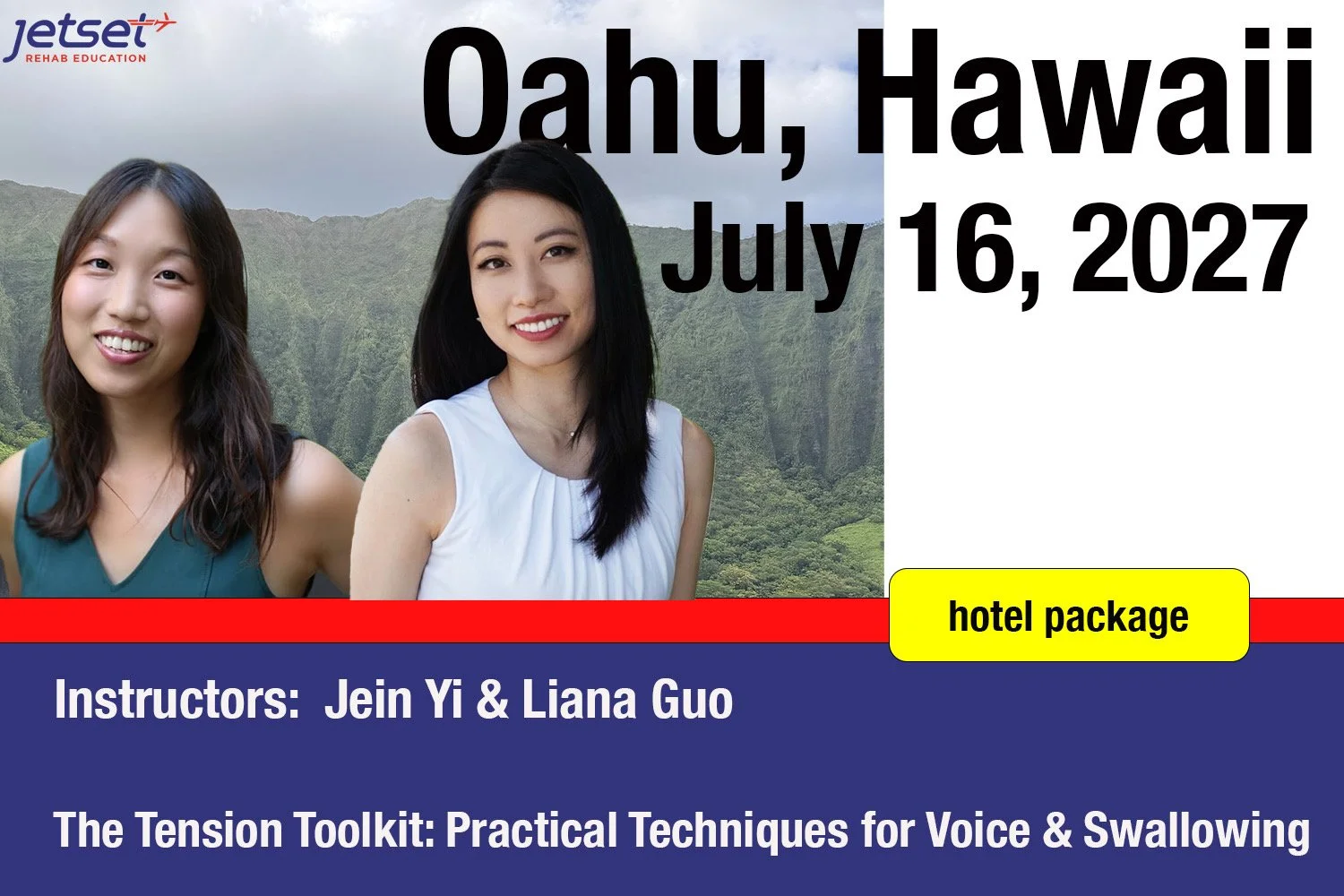
Location : HyattCentric Waikiki, Honolulu, Hawaii

Date : July 16th, 2027

CEUs - ASHA Pending

What’s Included : Course, Course Electronic Handouts, 1 night Hotel - HyattCentric Waikiki, Complimentary Breakfast, Lunch & Networking Happy Hour

Cost :

Hawaii Locals only $895

Basic (No Hotel) $1075

Elite (1 nt hotel) $1395

Social (Share room with fellow friend in class) $1250

Course Level - Beginner

Course Description

This course focuses on practical approaches to treating muscle tension dysphagia and muscle tension dysphonia. Topics include common causes of muscle tension, treatment techniques, and manual therapy approaches for clinical practice. Hands-on practice will give participants the opportunity to learn and refine techniques. The course will also cover common treatment mistakes and ways to troubleshoot when patients aren’t making progress. Participants will leave with practical tools and strategies they can apply in the clinic.

Learning Objectives

By the end of this course, participants will be able to:

  1. Identify common contributing factors and clinical presentations associated with muscle tension dysphonia and muscle tension dysphagia.

  2. Describe treatment approaches for managing muscle tension related to voice and swallowing disorders.

  3. Demonstrate selected manual therapy and other treatment techniques within their professional scope of practice.

  4. Identify common treatment errors and describe strategies for modifying treatment when patients are not making progress.

  5. Apply clinical reasoning to select and adapt treatment approaches based on patient presentation and response.

Course Schedule

8:30–8:50 AM | Welcome and The Tension Detective

  • Course overview and learning objectives

  • Participant poll and discussion of common clinical challenges

  • Identifying signs of muscle tension in voice and swallowing cases

8:50–9:30 AM | Understanding Muscle Tension

  • Common contributors to muscle tension

  • Relevant anatomy and physiology

  • Clinical presentations of muscle tension dysphonia and dysphagia

  • Case-based clinical reasoning activity

9:30–9:45 AM | Break

9:45–10:30 AM | Technique Lab: Introduction to Manual Therapy

  • Overview of selected manual therapy approaches

  • Demonstration of techniques and clinical rationale

  • Indications, precautions, and considerations for clinical application

  • Partner practice with guided feedback

10:30–11:45 AM | Clinical Application: Voice

  • Assessment considerations for muscle tension dysphonia

  • Treatment selection and progression

  • Application of manual therapy and complementary treatment approaches

  • Case-based group discussion and problem-solving

11:45 AM–12:45 PM | Lunch

12:45–1:05 PM | Review and Knowledge Check

  • Review of key concepts from the morning

  • Team-based quiz and discussion

  • Questions and clarification

1:05–1:55 PM | Clinical Application: Swallowing

  • Assessment considerations for muscle tension dysphagia

  • Treatment approaches and clinical decision-making

  • Considerations for incorporating manual therapy into a broader treatment plan

  • Case-based discussion and treatment planning

1:55–2:10 PM | Break

2:10–3:00 PM | The Tension Toolkit: Hands-On Practice

  • Rotating practice stations focused on selected techniques

  • Guided practice and peer feedback

  • Discussion of technique selection and clinical application

  • Review of precautions and common pitfalls

3:00–3:40 PM | Troubleshooting: When Treatment Isn't Working

  • Recognizing limited or inconsistent treatment response

  • Identifying common treatment errors

  • Modifying treatment approaches based on patient response

  • Small-group case challenge: Review and revise a treatment plan

3:40–4:00 PM | Clinical Takeaways and Course Wrap-Up

  • Review of key concepts and techniques

  • Individual clinical application planning

  • Final knowledge check

  • Questions and discussion

Packages:

Location : HyattCentric Waikiki, Honolulu, Hawaii

Date : July 16th, 2027

CEUs - ASHA Pending

What’s Included : Course, Course Electronic Handouts, 1 night Hotel - HyattCentric Waikiki, Complimentary Breakfast, Lunch & Networking Happy Hour

Cost :

Hawaii Locals only $895

Basic (No Hotel) $1075

Elite (1 nt hotel) $1395

Social (Share room with fellow friend in class) $1250

Course Level - Beginner

Course Description

This course focuses on practical approaches to treating muscle tension dysphagia and muscle tension dysphonia. Topics include common causes of muscle tension, treatment techniques, and manual therapy approaches for clinical practice. Hands-on practice will give participants the opportunity to learn and refine techniques. The course will also cover common treatment mistakes and ways to troubleshoot when patients aren’t making progress. Participants will leave with practical tools and strategies they can apply in the clinic.

Learning Objectives

By the end of this course, participants will be able to:

  1. Identify common contributing factors and clinical presentations associated with muscle tension dysphonia and muscle tension dysphagia.

  2. Describe treatment approaches for managing muscle tension related to voice and swallowing disorders.

  3. Demonstrate selected manual therapy and other treatment techniques within their professional scope of practice.

  4. Identify common treatment errors and describe strategies for modifying treatment when patients are not making progress.

  5. Apply clinical reasoning to select and adapt treatment approaches based on patient presentation and response.

Course Schedule

8:30–8:50 AM | Welcome and The Tension Detective

  • Course overview and learning objectives

  • Participant poll and discussion of common clinical challenges

  • Identifying signs of muscle tension in voice and swallowing cases

8:50–9:30 AM | Understanding Muscle Tension

  • Common contributors to muscle tension

  • Relevant anatomy and physiology

  • Clinical presentations of muscle tension dysphonia and dysphagia

  • Case-based clinical reasoning activity

9:30–9:45 AM | Break

9:45–10:30 AM | Technique Lab: Introduction to Manual Therapy

  • Overview of selected manual therapy approaches

  • Demonstration of techniques and clinical rationale

  • Indications, precautions, and considerations for clinical application

  • Partner practice with guided feedback

10:30–11:45 AM | Clinical Application: Voice

  • Assessment considerations for muscle tension dysphonia

  • Treatment selection and progression

  • Application of manual therapy and complementary treatment approaches

  • Case-based group discussion and problem-solving

11:45 AM–12:45 PM | Lunch

12:45–1:05 PM | Review and Knowledge Check

  • Review of key concepts from the morning

  • Team-based quiz and discussion

  • Questions and clarification

1:05–1:55 PM | Clinical Application: Swallowing

  • Assessment considerations for muscle tension dysphagia

  • Treatment approaches and clinical decision-making

  • Considerations for incorporating manual therapy into a broader treatment plan

  • Case-based discussion and treatment planning

1:55–2:10 PM | Break

2:10–3:00 PM | The Tension Toolkit: Hands-On Practice

  • Rotating practice stations focused on selected techniques

  • Guided practice and peer feedback

  • Discussion of technique selection and clinical application

  • Review of precautions and common pitfalls

3:00–3:40 PM | Troubleshooting: When Treatment Isn't Working

  • Recognizing limited or inconsistent treatment response

  • Identifying common treatment errors

  • Modifying treatment approaches based on patient response

  • Small-group case challenge: Review and revise a treatment plan

3:40–4:00 PM | Clinical Takeaways and Course Wrap-Up
  • Review of key concepts and techniques

  • Individual clinical application planning

  • Final knowledge check

  • Questions and discussion

Our Instructors :


Instructor CVs:

Liana Guo, MS, CCC-SLP

Liana Guo is a lead speech-language pathologist at Kaiser Permanente and co-owns a private practice specializing in voice and swallowing disorders. She has collaborated with physicians across specialties to treat complex voice and swallowing disorders and has led voice workshops for performing arts students. Liana has presented and published research on alaryngeal speech and co-authored Gender-Affirming Voice Training: A How-To Guide for Clinicians and Voice Professionals in 2025. She earned her bachelor’s degree from New York University and her master’s degree in Communication Sciences and Disorders from the MGH Institute of Health Professions.

Jein Yi, MS, CCC-SLP

Jein Yi is a speech-language pathologist at Kaiser Permanente and co-owns a private practice specializing in voice and swallowing disorders. She is passionate about manual therapy and  enjoys sharing her clinical experience and treatment techniques with fellow clinicians. Jein co-authored Gender-Affirming Voice Training: A How-To Guide for Clinicians and Voice Professionals in 2025 and has shared her clinical expertise through podcast interviews. She earned her bachelor’s degree from the University of California, San Diego, and her master’s degree in speech-language pathology from Boston University.