
Is the OCS Recertification Worth the Cash and the Stress? My Honest Review of the Process

Pondering my decision of recertifying in Cabo after the Jetset Rehab Education course with Dr Daprato on Myofascial Decompression.
If you’re staring down your 10-year American Physical Therapy Association (APTA) Specialist Certification renewal, you already know the landscape has changed. The days of sitting for a massive, high-stakes proctored exam at a testing center are gone—replaced by a maintenance model that includes a continuous "Knowledge Review." (This is of course unless you prefer the pressure of the proctored exam which is an option to any person recertifiying)
I recently completed the OCS Knowledge Review, and honestly, it was a completely different beast than the initial exam. If you are currently on the fence about recertifying or feeling overwhelmed by the process, here is a transparent look at exactly how it went, what it costs, how to prep, and my ultimate takeaway on whether it's worth it.
1. Navigating the Logistics: Registration & The Portfolio
The recertification process starts long before you open the exam portal. You have to prove you’ve been doing the work over three distinct Maintenance of Specialist Certification (MOSC) cycles which occur at 3, 6, & 9 years from your last test. .
The Cost Breakdown (Member vs. Non-Member)
First, let’s talk numbers. The total financial commitment varies drastically depending on whether you maintain your APTA membership:
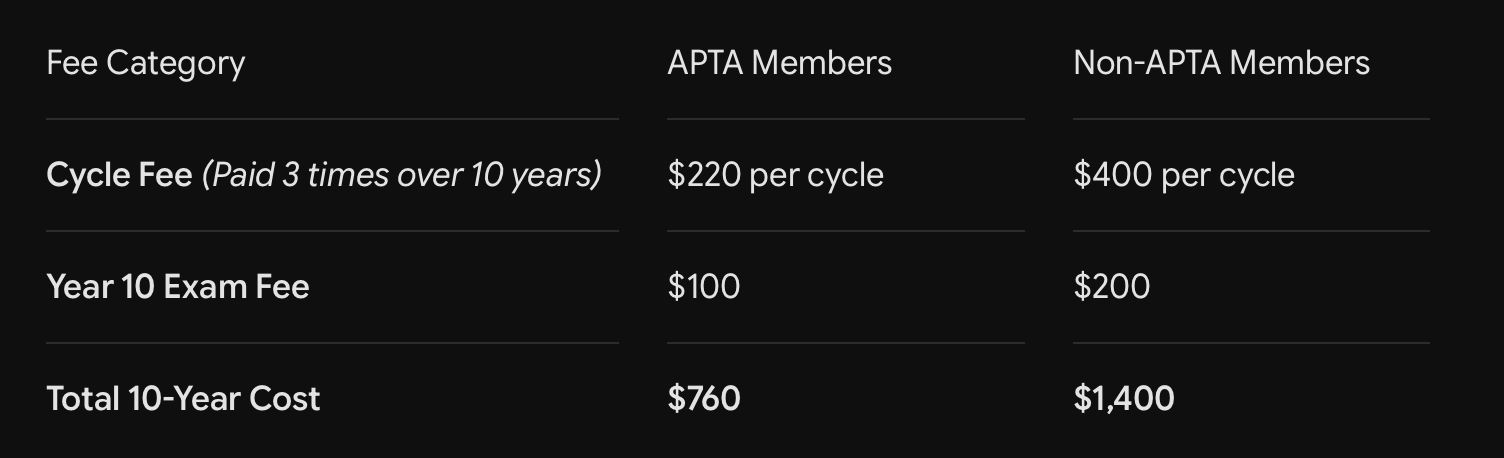
Fee schedule for OCS recertification APTA vs Non-APTA members
Building the Portfolio
To sign up, you have to compile a variety of information. You will need to gather and submit your current license, verified direct patient care hours, and a comprehensive record of your professional development. This includes:
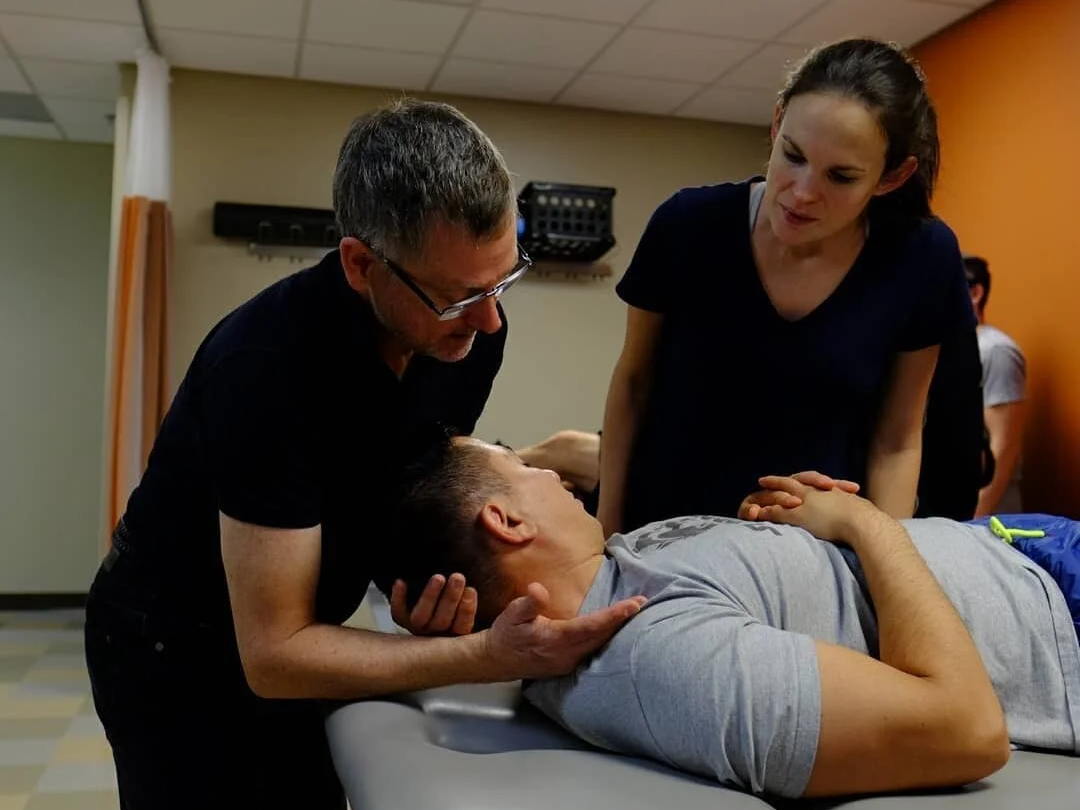
Yes. CEUs count as pert of your recertification. Participant learning Neurodynamics with Michael Shacklock at a Jetset Course.
Continuing education courses (Con-Ed) / CEUs (Like the ones you take with Jetset Rehab Education 😊)
Clinical teaching (in a school or con ed setting), supervision or mentorship hours
Relevant administrative work and leadership work such as being a subject matter expert, item writing for an exam, starting a residency or fellowship, community service.
The Case Reflection: This was a lengthy, deep-dive section which engages into orthopedic clinical reasoning. Writing it honestly reminded me of my days filling out prep forms for fellowship mentors as it did a 360 view on a specific patient case. It takes a significant amount of time—arguably the longest part of the entire onboarding process—so do not leave this until the last minute.
For more information on this section, I would refer you to the MOSC requirements on the APTA website.
2. My Study Roadmap: What to Review
Because this is a modern clinical review, you aren’t just memorizing obscure knowledge; you are reviewing current evidence-based guidelines and hopefully leveling up your game in clinic. My study strategy focused heavily on high-yield, day-to-day clinical navigation:
Clinical Practice Guidelines (CPGs): I lived on Orthopt.org. If you want to know what the exam values, look at the academy's current guidelines.
Audio Prep: I utilized the OCS Field Guide exam podcast/audio resources during commutes and downtime to keep the concepts fresh.
Differential Diagnosis & Red Flags: I spent dedicated time brushing up on systems screening, ensuring I could quickly differentiate mechanical musculoskeletal issues from systemic or non-orthopedic pathologies.
Clinical Decision Rules: Reviewed these after listening to OCS Field guide. Make sure to review your standard fracture rules (Ottawa, Pittsburgh, etc.) and risk assessment algorithms like the Wells Criteria for DVT.
If you want to go even deeper, you could most definitely go through the Current Concepts or the Orthopedic PT section, but I didn’t feel i had the time to do this.
3. Game Day: The Exam Mechanics
The structure of the Knowledge Review is similar in testing as prior OCS exam questions but incorporates how you find and apply information, not just what you can recall under absolute isolation. However, going into exam with a good knowledge base will make this much easier to take.
Format: The exam is open book.
Structure: It is split into 4 distinct sections, with 25 questions per section (100 questions total).
The Clock: You are allotted 12 minutes per question.
The Reality Check: Do not let the phrase "open book" trick you into a false sense of security. Having 12 minutes per question sounds like a luxury, but when you are unsure of an answer and actively flipping through a dense CPG to cross-reference a specific recommendation level, that clock ticks down incredibly fast. The time pressure is real and handles like a true constraint if you aren't prepared.
4. Immediate Gratification: The Results
One of the absolute best parts of this updated format is the elimination of the agonizing multi-month waiting period. You get immediate feedback if you answered a question wrong with regards to why. I also received my final results the exact same day I finished. Submitting that final section and immediately knowing where you stand is a massive quality-of-life upgrade from the classic board exam experience.
All smiles after recertifying !! This was a Jetset Course in Da Nang, Vietnam with Dr Clare Frank
Epilogue: Is the OCS Recertification Worth It?
If you are on the fence about going through this, I highly recommend taking the leap.
Overall, I found the entire process to be an excellent review of current clinical guidelines while still heavily relying on the type of deep, experiential clinical reasoning that an experienced OCS should know inside and out. Forcing yourself to go back, review differential diagnosis, and critique your own frameworks genuinely sharpens your current day-to-day patient care.
My Final Tips for Success:
Don't wing the prep: Even though it's open book, you cannot research every single answer from scratch.
Organize your workspace: Having an incredibly organized, easily searchable digital notebook is the ultimate weapon against that 12-minute timer.
It’s a commitment, but keeping those three letters behind your name matters. It’s great for you and awesome visibility for our profession. Good luck to everyone prepping for this cycle!