
Are CEU Courses Tax Deductible for Physical Therapists, OTs, and other Rehab professionals? (2026 Guide) The guide to IRS Tax Topic for Clinicians.
Every year, physical therapists, occupational therapists, chiropractors, ATCs, and other rehab professionals spend thousands of dollars out-of-pocket on continuing education. Clearly, this is part of meeting licensure requirements as well as growing clinically. However, with those expenses, there are some benefits outside professional needs. If you are a private practice owner, an independent contractor, or a cash-pay clinician, writing off those expenses for yourself or staff isn't just a luxury—it’s a major business advantage.
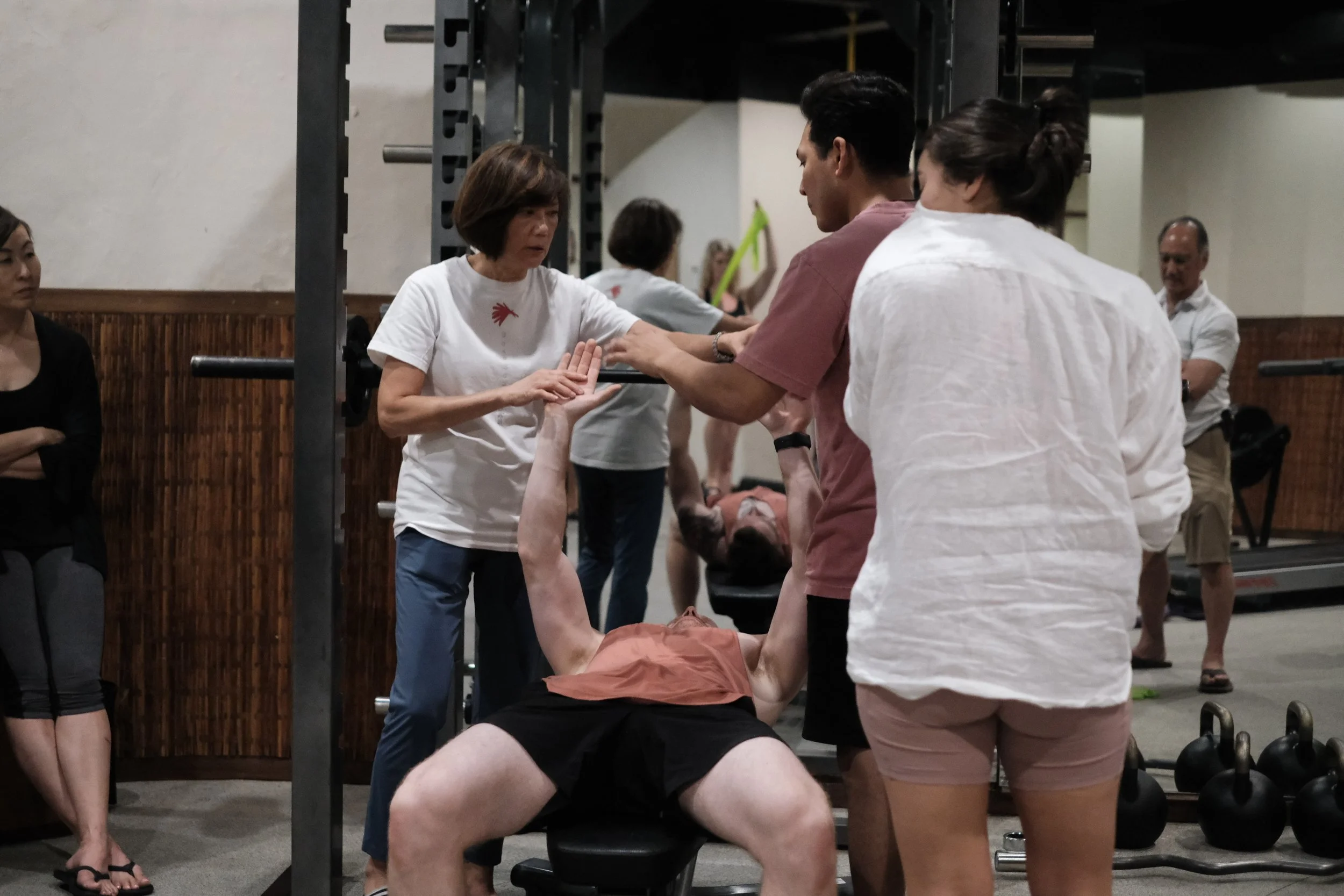
Dr. Clare Frank instructing clinicians in Bali
If you have been eyeing a premier out-of-state seminars but hesitating over writing a big check upfront, you need to know how to leverage a highly effective tax strategy. By utilizing a legitimate IRS framework, you can tap into a business loophole that lets you write off your course tuition, lodging, and travel expenses using pre-tax dollars. Here is exactly how it works under current tax law.
What is IRS Tax Topic 513 for Work Related Education Expenses?
According to the Internal Revenue Service via Tax Topic No. 513 (Work-Related Education Expenses), self-employed individuals and business owners can fully deduct the cost of education paid during the year if it meets specific clinical benchmarks. To safely utilize this deduction, your continuing education must meet at least one of these two criteria: 1. The education maintains or improves skills needed in your present work. 2. The education is required by law or regulation to keep your present salary, status, or job. Because Jetset Education’s clinical curriculums focus on elevating your current clinical reasoning, diagnostics, and treatment interventions (such as neurodynamics, movement education, or blood flow restriction), they align perfectly with the standard to "maintain or improve" your professional skill set.
The One Exception to the Rule
Per Topic 513, you cannot deduct education if it is part of a program that qualifies you for a new trade or business, or if it only meets the absolute minimum educational requirements to enter the field.

Clinicians networking
Can I deduct Travel and Lodging for Destination Physical Therapy CEUs or Occupational Therapy PDUs?
A common misconception among clinicians is that if a high-level course takes place in a beautiful destination like Hawaii, Cabo, or Phuket, the IRS will automatically disallow it. This is where the loophole works in your favor. Under IRS Tax Topic 513 and Publication 463, the costs of certain transportation, travel, and lodging costs incurred while getting your education are completely deductible, provided the primary purpose of the trip is business-related.
What You Can Claim:
● 100% of Course Tuition: The total cost of registration, course manuals, and hands-on lab fees.
● Travel and Transportation: Your flights to and from the destination, or your standard business mileage if you drive.
● Lodging: Your hotel or resort accommodations for the explicit calendar dates of the educational course.
● Meals: Food and beverage costs during your active business travel window (subject to standard annual IRS percentage limits).
Note: If you extend your stay by a few days to lounge by the beach after class wraps up, you simply prorate your lodging and meals. You write off the course days as a business expense and cover the vacation days personally.
The Real Math: How writing Continuing Education Benefits Private Practices, Independent contractors, & Cash pay clinicians.
When people look at the upfront price tag of a premium continuing education course, they are usually looking at it through the lens of personal, post-tax income. When you route it correctly as a business expense through Schedule C (Form 1040), the math changes completely:
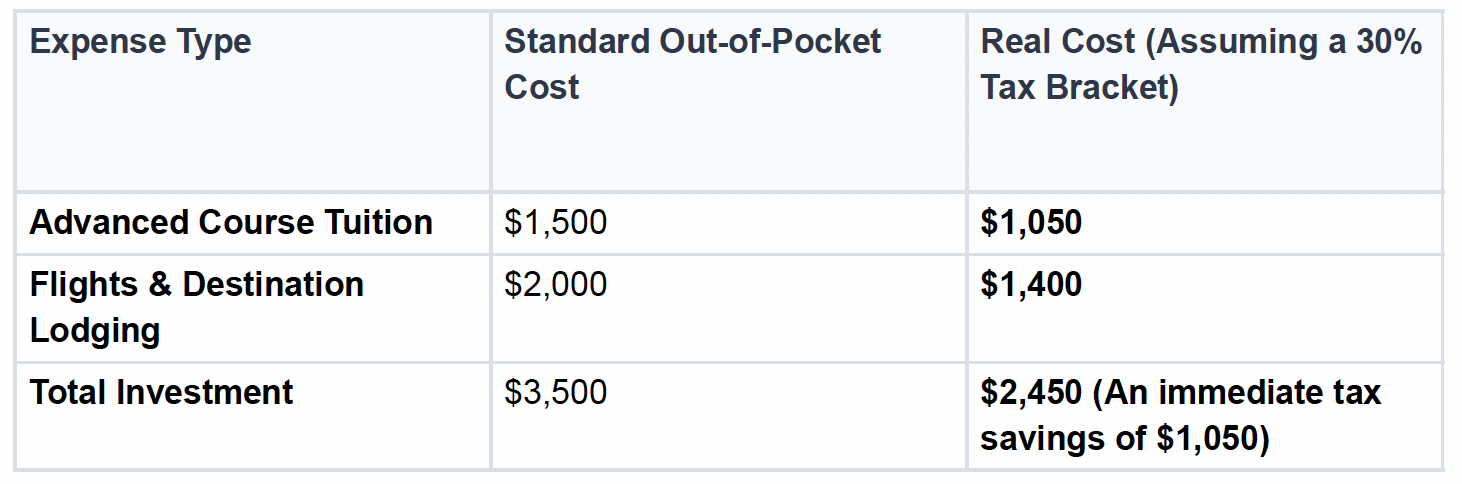
*Possible Tax savings…Please check with financial advisor / accountant.
By utilizing pre-tax business revenue, you lower your clinic's net profit, which directly slashes your year-end self-employment and income tax obligations.
High Upfront Costs? How to Protect Your Cash Flow
We know that managing monthly clinic overhead while planning professional development travel requires strategy. You shouldn't have to take a massive upfront cash flow hit to secure world-class education. To completely bypass that financial friction, we have structured a flexible payment ecosystem tailored for busy practice owners:
● Secure Your Seat with a Deposit: You don't have to pay the full tuition upfront. Lock in your spot in our limited, small-group destination labs with a simple course deposit.
● Interest-Free Installments: We offer automated pay-over-time options at checkout, letting you split the remaining balance across multiple billing cycles to perfectly align with your monthly revenue.

Dr Chris Daprato reviewing Myofascial Decompression with clinicians in Cabo, Mexico.
Put Your Business Dollars to Work
Don't let your continuing education budget go to waste on uninspiring seminars. Elevate your clinical mastery alongside industry legends while maximizing your legal business write-offs. Secure your next Tax Deductible Experience….check out our current course schedule here :