
Manual Therapy vs. Exercise: What the Central Sensitization Data Actually Shows
"Manual therapy people" and "exercise people" still act like two camps sometimes, like picking one is a philosophy statement about your practice. The research doesn't hand either side a clean win. Manual therapy has a small, fairly consistent effect on one specific pain measure. Exercise clearly helps patients but doesn't reliably move the lab markers researchers use to study pain sensitivity. And pain education's apparent edge on those same markers turns out to rest on a measurement problem — once you see it, it changes how you should read almost everything else here. Worth knowing the real shape of this evidence before you lean on any mechanism claim with a patient.
What manual therapy actually seems to do
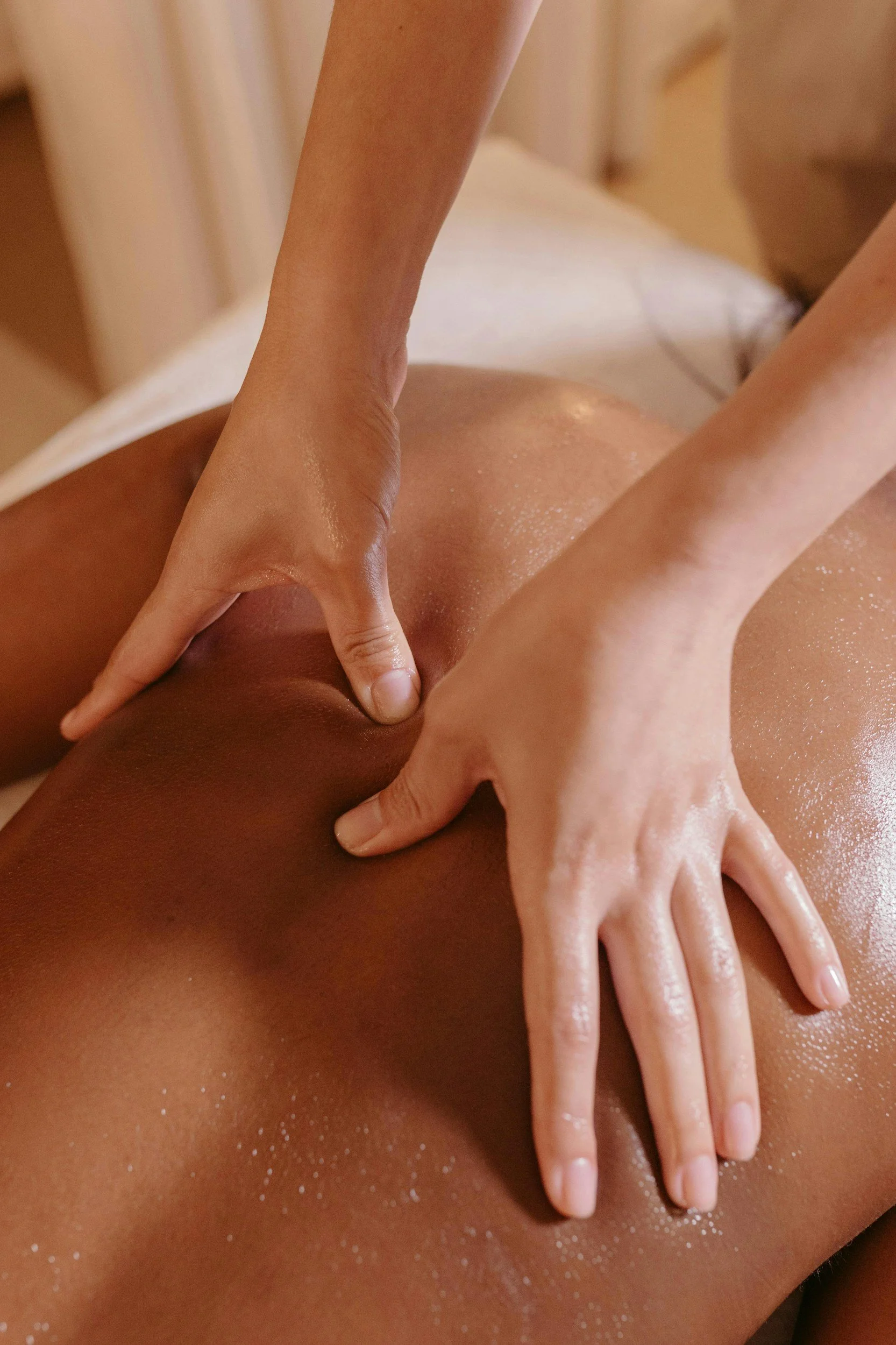
A 2024 review pulled together the existing research on how manual therapy changes pain processing. The clearest finding: a small but real effect on something called temporal summation — basically, how much your nervous system ramps up pain in response to repeated poking or pressure. A second, slightly bigger effect showed up for plain old pressure sensitivity (how much force it takes before pressure starts to hurt).
Two more recent reviews (2025) back this up without adding much new: manual therapy produces real, measurable nervous-system effects, but they're inconsistent and show up most reliably with repeated, purposeful treatment — not a one-touch fix.
Bottom line on manual therapy: its best-supported effect is turning down how much pain ramps up with repeated stimulation. Modest, but real.
What exercise actually seems to do
A 2024 review set out to answer a specific question: does exercise, by itself, change the lab markers of pain sensitization? They looked at two of the standard tests researchers use — one measuring how much pain builds up with repeated stimulation, and one measuring the body's built-in ability to dampen pain (imagine a "turn the volume down" reflex). Exercise was split into four types: cardio, strength training, isometric holds, and motor control work (think targeted stabilization exercise).
The result: no effect overall, on either test. The one exception was motor control exercise, which showed a real improvement in the body's pain-dampening ability — but that finding came almost entirely from people with chronic neck pain, and when researchers directly compared exercise types against each other, none was significantly better than any other. In plain terms: this is a lead worth exploring, not a rule to practice by yet. The researchers themselves called it a starting point for future research, not something ready for the clinic.
Here's the important twist: none of this means exercise doesn't help patients. A 2026 review in JAMA found supervised exercise clearly reduces pain and disability in chronic low back pain, with no particular type of exercise beating the others. So exercise works — researchers just can't show it's working by "fixing" the sensitization markers they know how to measure. That's a good reason to keep prescribing exercise with confidence. It's not a good reason to tell a patient it's "recalibrating their nervous system," because nobody's actually shown that part.
The pain-education "advantage" that turned out to be a measurement problem
A 2026 study compared several treatments — manual therapy, pain education, exercise, and a few others — against two ways of measuring central sensitization: a symptom questionnaire, and a pressure test. Pain education came out on top on both. But the two results deserve very different levels of trust.
On the pressure test, pain education's effect was enormous — genuinely one of the largest effect sizes you'll see for a behavioral treatment anywhere in this literature. On the questionnaire, pain education's effect actually wasn't statistically real once you account for the uncertainty in the data. The study's authors called this split a "disconnect" between the physical test and the symptom report.
Here's why that "disconnect" isn't as mysterious as it sounds. A separate 2023 study asked a very direct question: does that symptom questionnaire actually measure nerve sensitization, or does it measure something else? The answer: it measures something else. It tracks depression, anxiety, stress, catastrophic thinking, poor sleep, and fear of movement far more closely than it tracks any actual pain-sensitivity test. In the researchers' own words, the questionnaire "more closely reflects psychological hypervigilance than increased responsiveness of nociceptive neurons" — meaning it's picking up how worried and on-edge someone is about their pain, not what their nerves are actually doing.
Once you know that, the "disconnect" mostly explains itself. The questionnaire and the pressure test aren't two windows into the same thing — they're measuring two different things. So a treatment moving one and not the other isn't evidence of some special mechanism. It's just what happens when you use two different rulers and call them the same ruler.
As for that enormous pressure-test number: treat it with real skepticism. An effect that large, from small studies where nobody was blinded, testing something known to be sensitive to expectation and suggestion, is exactly the kind of result that tends to shrink or disappear once better studies come along.
What this all means, held honestly
Manual therapy has a small, real effect on one specific pain measure. Exercise clearly works clinically but doesn't reliably move the lab markers of sensitization. Pain education's apparent edge on those same markers is mostly explained by which test you're looking at, not a special power to "fix" the nervous system. None of the three has a clean, provable mechanism story — and that's worth admitting instead of picking a favorite explanation to sound authoritative with a patient.
Where pain education actually earns its place
Worth saying plainly: pain education isn't a fringe idea somebody made up to sell a workshop. Lorimer Moseley and David Butler's foundational 2015 paper laid out the core argument — pain and tissue damage aren't the same thing, and teaching a patient that distinction changes how their nervous system responds to it. Adriaan Louw, one of the field's most prolific researchers, backed that with a 2016 review linking pain education to real gains in pain, function, and fear avoidance. The theory has a real evidence base behind it.
What's shifted since then isn't the theory — it's how it should be used. In 2021, Louw himself published a piece arguing pain education had been overused as a stand-alone treatment and should instead work as an adjunct that gets patients moving, with exercise as the actual primary intervention. Moseley made a similar point in 2024, publishing new delivery frameworks because early enthusiasm had outrun the evidence on how — and how much — pain education actually needs to be delivered to work. In other words: the people who built this field already landed on "pair it with movement," independent of the newer data below.
A late-2025 review looked specifically at pain education for chronic low back pain and found big improvements in pain, disability, fear of movement, and catastrophic thinking — improvements that got larger over three months, which is an unusual pattern for an educational intervention.
Too unusual, in fact. An older, more careful 2019 review of pain education gives a very different picture, and it's the more trustworthy one. When pain education is delivered alone, it does basically nothing for pain — not a statistically real effect. When pain education is added on top of physical therapy, the effect on pain and disability is real, and on disability specifically, roughly ten times bigger than the "alone" version. A national physical therapy guideline backs this up bluntly: none of the studies testing pain education by itself found it helped pain, while most of the studies pairing it with exercise or manual therapy did.
That gap is probably why the newer, rosier review looked so good: it lumped "pain education alone" studies together with "pain education plus treatment" studies into one number, which inflates how good pain education looks on its own.
And here's a genuinely surprising wrinkle on how pain education works, when it does work: a 2023 study tracked exactly what changes actually drove the benefit. It wasn't a drop in catastrophic thinking, and it wasn't a drop in pain itself — despite those being the two things pain education is usually assumed to target. What actually predicted better outcomes months later was a drop in fear of movement and in general pain-related distress. Worth remembering next time a patient's catastrophizing score looks like the star of the show — it might not be doing the actual work.
The takeaway: pain education isn't a stand-alone treatment, and the flashy recent numbers shouldn't be read as proof that it is. What's well-supported, from multiple separate sources, is pain education paired with a real exercise program — and even then, it likely works by easing fear of movement, not by lowering pain scores directly. A 2024 dose-response analysis puts a real number on "paired with": it took roughly 200 minutes of pain education alongside exercise to produce a meaningful drop in pain, and about 150 minutes to meaningfully improve disability — a real program delivered over multiple sessions, not a single handout at the first visit. The 2026 JAMA review frames the bigger picture the same way at a national level: education, exercise, and psychological support together are the recommended first approach for chronic low back pain — with exercise dosed seriously, not a home handout. Worth noting: that same review treats "sensitization" language as a way to help patients understand their pain, not as a proven treatment target.
Putting the whole picture together
Here's the honest scorecard on the claims floating around this topic:
"Exercise fixes nervous system sensitization." Not shown — no overall effect on the standard lab tests.
"The symptom questionnaire and the pressure test measure the same thing." Not shown — the questionnaire tracks psychological distress, not nerve sensitivity.
"Pain education beats exercise on sensitization measures." A weak claim — it rests on comparing two different things and one outsized, hard-to-trust number.
"Pain education alone reduces pain." Not shown, across two separate sources.
"Pain education plus exercise or manual therapy reduces pain and disability." Well supported.
"Pain education works by reducing catastrophic thinking." Not shown — fear of movement and general distress seem to matter more.
"Exercise plus education, and sometimes psychological support, is the right first step for chronic low back pain." Well supported, and consistent with national guidelines.
The through-line: "central sensitization," as it's currently measured, isn't something you can reliably treat or track. The questionnaire measures worry. The physical tests measure something the questionnaire mostly doesn't. Neither one tracks the real-world improvement that exercise and pain education actually produce. That's not a reason to stop using either — it's a reason to judge them by what they actually move (pain, disability, function) instead of a nervous-system story the tools can't back up yet.
What this actually changes about your plan of care
Stop treating manual therapy and exercise as competing options. Using one to justify skipping the other isn't evidence-based — neither one's mechanism story is strong enough to claim it replaces the other.
Don't oversell one type of exercise as "the" sensitization fix. The one positive signal (motor control exercise, in neck pain) came from a small subgroup, not a head-to-head win over other exercise types.
Use manual therapy as a way to get someone moving, not the whole plan. Its effects look real but short-term and dependent on consistent, purposeful application.
Never hand out pain education without exercise attached. Two separate sources agree: pain education alone doesn't move the needle on pain. Pair it with a real program.
When you talk to a patient about "calming the nervous system," be clear with yourself that it's a communication tool, not a proven mechanism. It's a genuinely useful way to help a fearful patient understand their pain differently — just don't present it as settled science.
Take the biggest, flashiest numbers in this space with a grain of salt. The largest effect sizes in this whole post — one pressure-test number, one standalone-pain-education number — are exactly the ones that don't hold up under closer examination.
Bottom line
The old "manual therapy vs. exercise" debate was never really a fair fight, and the more you look, the less any of the three approaches here — manual therapy, exercise, pain education — turn out to work the way their usual explanations claim. Manual therapy has a small, real effect on one pain measure. Exercise clearly helps without provably touching the lab markers of sensitization. Pain education's headline numbers mostly come apart once you separate "alone" from "with treatment," and once you realize the questionnaire behind its biggest win is measuring worry, not nerve function. None of that means drop any of them. It means use all three for what they're actually shown to do — manual therapy to get someone moving, exercise as the real driver, and education to help a patient understand and stick with the plan — in general integration and utilization of each based on your patient is key.